Pages

Wednesday, 11 July 2018

Create A Formative Assessment Using G-Suits

Session 6 - John Meing - Create a formative assessment using g-suits

This was a very theory based workshop with lots of discussion around John Hattie - effect size
Douglas Fisher’s - visible learning in mathematics

“Formative assessment refers to to a wide variety of methods that teachers use to conduct in-process evaluations of students comprehension, learning needs and academic progress during a lesson, unit, or course .”


Dillian William (good friends of Paul Black) - discusses the difference between formative and summative assessment.

Proposed Model

Doug fisher - learning can be at any point along the continuum - All 4 components must be present in every lesson at some point - it creates a whole cycle of learning if you do all each day.

Focused instruction -
  • purpose, (not intention/objectives - because relevance must be there - e.g. must have intention and relevance (interesting and relevance.)
  • Modeling-  open up your brain and talk about the process.  I statements not we or you statements … When I read this … I was thinking about…
When i saw the problem … META-COGNITION should have a because, why or how.
Guided instruction
The strategic use of questions, prompts and cues.
  • Ask questions prompt or cues that means that they do the cognitive work not us …
  • Insert yourself into the group or take children out of different groups and work with you as a small group.
Collaborative
  • Student to student interaction (in academic ways, with academic language).
  • No on learns language from listening to language they only use it by producing the language - students must use the language to learn the language.
Independent learning
  • In-class we are pretty good at this - we aren’t so good at out of class independent learning - we give homework prematurely …


The keys to making this work within our classrooms

Establish purpose  
School planning template
Teacher modeling
I do it …
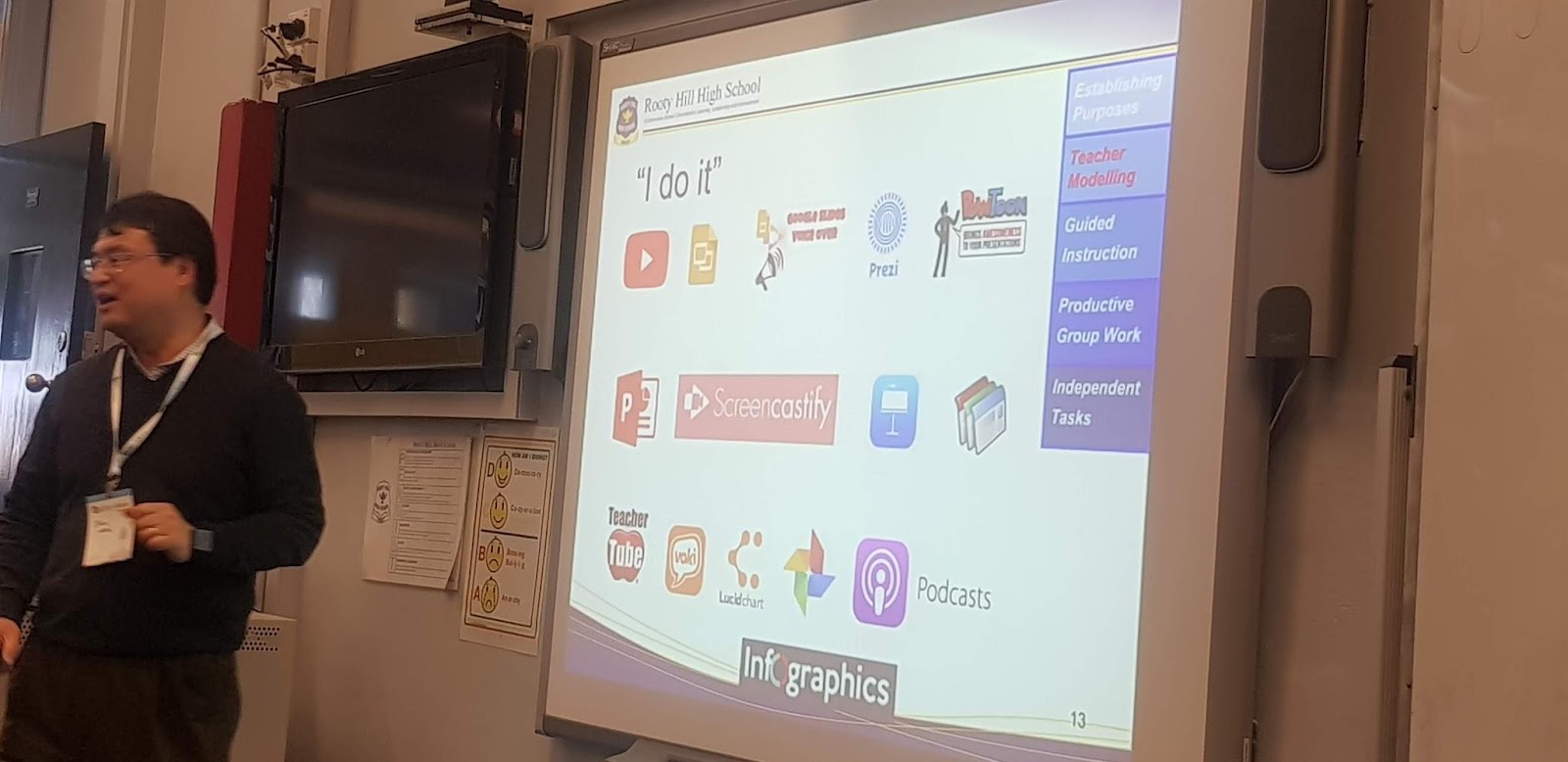
Guided instruction
  • share 3 different versions easy, medium and hard and have students choose their own - if all choose easy then we know we have a problem
  • In google docs - you can set the comments to only the owner and teacher can comment.
  • If you design your Kahoot well you can set it up as a good formative assessment tool.
  • Google sheets - validation can support - not super interactive but will allow them to check their answer and have instructions on how to add. - also self marking.
Productive group work
  • Google suite’s is all shareable …
  • Class Dojo - PBL (positive behaviour learning - which doesn’t always work) - however they do have a think/pair/share.
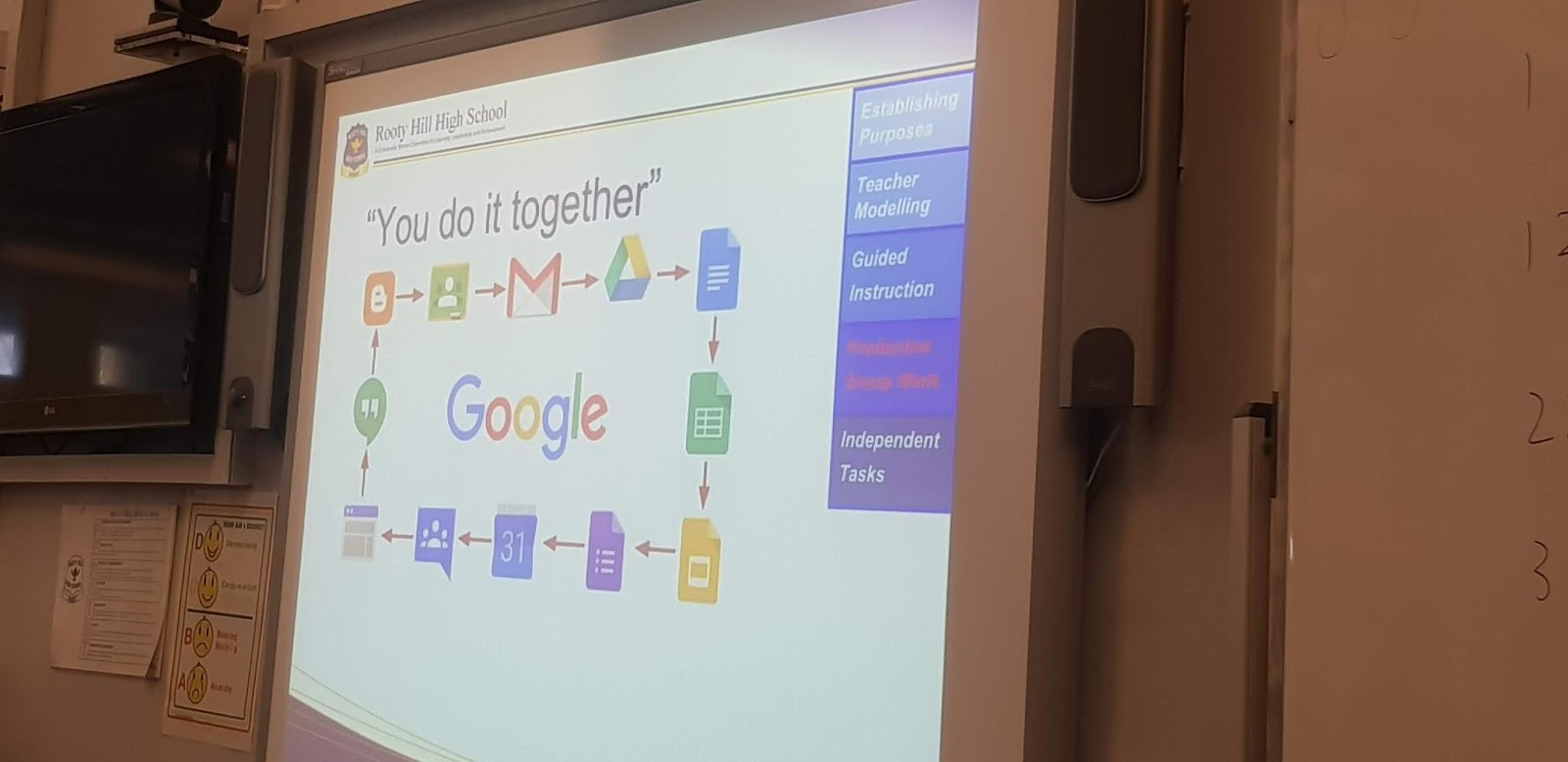
Independent tasks
  • Captivate - a new tool.??? Not sure of its use…

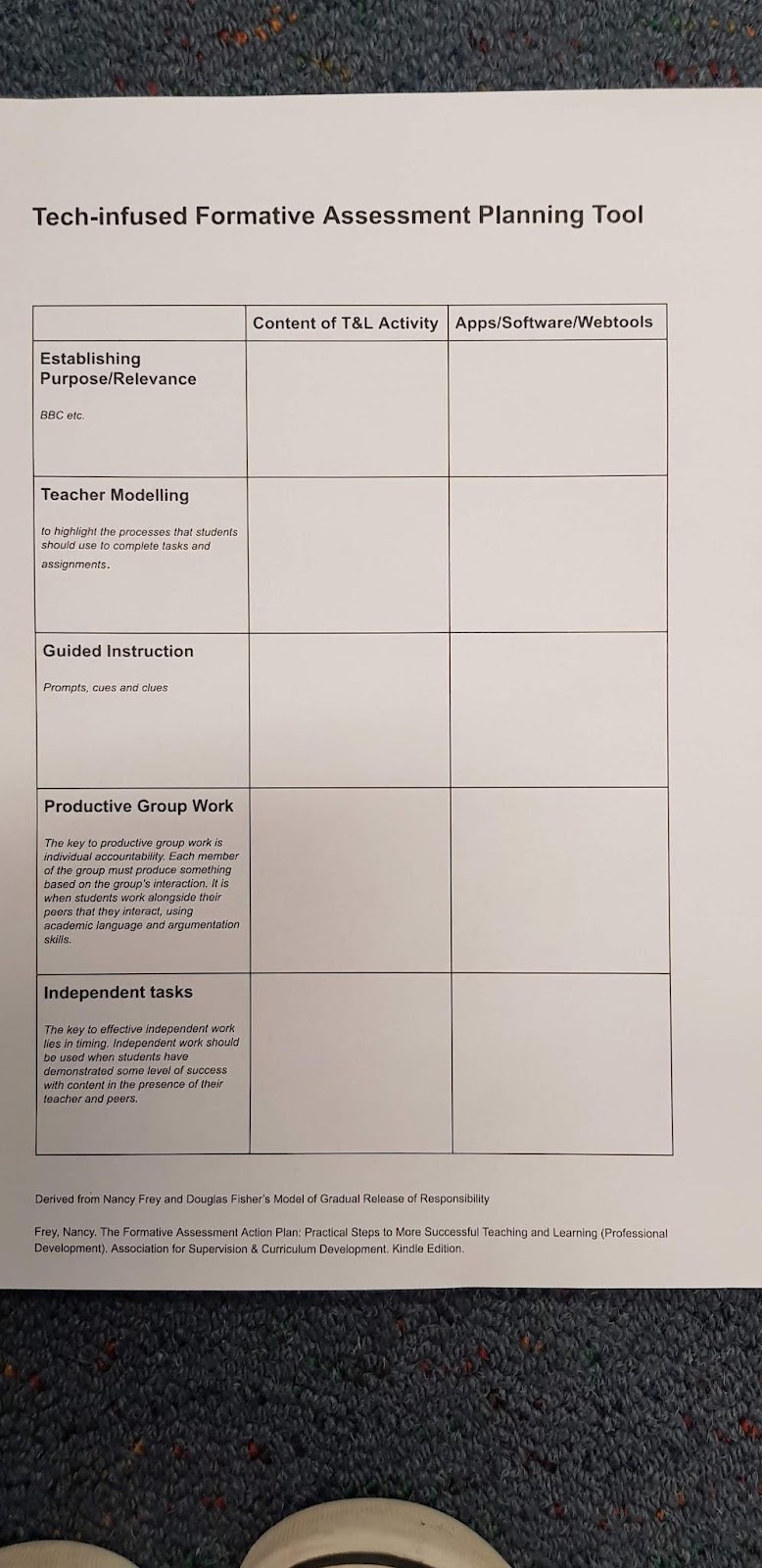
Their schools worksheet tool/example. This was interesting but I have to say that I love how as a school and team we plan/talk and together with our children we Learn, Create, Share within learning contexts that relate specifically to our (students and to some degree teachers) interests and learning needs.

This was an interesting workshop to attend as many that were offered were about applying skills rather than the theory behind it. Was interesting to see/hear an Australian schools point of view. John worked at a school that currently has been awarded an innovation award 3 years in a row for their innovation in education.


Side note: Cool problem - see picture (answer is 5 - count the circles)


PBL in a digital world

(lots of links from to other sessions in the top drop down menu).

Ultimately it doesn’t really matter which model of inquiry you use - but consistency within a school is key. It should be similar - and the process need to be similar to encourage collaboration …


Start with a challenge or question that we are wanting to delve into - must be one that has depth and also one that is something that people want to find out about . - see doc for collated list of things you can do.  


Hyper docs

Live word cloud - collaborative - Screen

Plant a seed (idea) and watch it grow

Really cool - Love it !
Major setting to change is the spam - turn it on (defaults to off). - If you change this to on, you automatically remove some questionable responses/words getting through.
Change discover-ability to hidden rather than public - due to it being used in an educational context.

googles inside search -
Search for a person place or thing
The bar on the right of a google search seeks to answer the next logical question that you will ask next - e.g. it answers questions you haven't yet asked.
A great place to broaden understanding of a person place or thing - links connections that you may not have already had.

recently updated
Lots of new bits - can link record add photos ...
(comments can also be added to individual stickies).
Terms of use require us to directly supervise children's’ use of this tool - Permission and use from under 13 year olds is OK if supervised.

I loved revisiting this as part of creating my presentation for yesterday. Loved how you could also use your own background image - to personalise it more.

Make things that look beautiful. - including certificates, posters … Vouchers …


lots of opportunities for our readers.

dotEPUB
an extension that will take a website and convert it into an e-book.

converts ugly wiki information into something that looks nicer to read - install the extension (downloadable to chrome).  But only works on wiki

Read and write
link to free version for teachers - takes 24-48 hours to authorize premium access.
Premium tools - fill in the form and you get it free.
This can also make a word list with word, definition, picture and place for notes
Highlights can then be added directly to a document (with links back)
Can simplify a webpage to make it accessible to everyone!

TAKE AWAY IDEAS!

So many cool things to use back in my classroom.  Its more a question of where will I start, but we need to start somewhere ... SO here is my plan.

Answer garden - for whole class Inquiry
Canva - for both class and MIT Inquiry
I liked the sound of dotEPUB so would like to investigate this further


Keynote Speaker - Day 2 EdTech Team - Sydney Summit

My take on Keynote speaker - Lindsay Wesner- Once upon a time


In order for our students to feel OK with failing, we need to show our students how we
ourselves fail. We need to do this by normalising it as part of what we call innovation, and
also by doing it on a regular basis so they see that it is just apart of everyone's learning
journey.

In order to do this well we need to ...


BE BRAVE - even if your not … Be the goldfish with the shark fin on!


By doing this we force ourselves to go outside our comfort zone.  When we do go outside our
comfort zone we go to where the magic in education happens.  Not just for ourselves but also
for our students and their whanau.


Lindsay also talked about the intersection of education, technology and passion, and how in
the middle is the sweet spot - and how its where things become more personal as well.  This
also links into Jesse’s Keynote about finding the superhero in our students and that to do
this we need to find the passion and ignite/foster this passion.


What is INNOVATION - and what does it mean.

  • Innovation is things that are not necessarily new, but that unlock new value - e.g. what is the new value, what is the point of it. This links to David Andersons “parrot of purpose” and also John Hatties “Know thy impact” type ideas.
  • Change is hard - it creates conflict, and challenges our thinking/standard practice. Some change works some does not. For me it's knowing which changes to persevere with and which ones are not.   This comes back to the they key idea above of knowing your impact or the impact (or possible impact) this change will make.
  • As a teacher we are or have been at a point of conflict for others in their educational journey- if we navigate the conflict we determine what the conclusion/climax are.  This relates both to ourselves, other educational professionals and also to our students.
  • When we challenge students but support them to navigate these challenges their learning and experiences propel them forwards.  


A key point for me in this process is capturing these moments and experiences and ensuring that these are shared. I am fantastic at capturing pictures of children succeeding but not so good at capturing them struggling.  A NEW GOAL.


This leads onto 2 questions Lindsays' challenges us with;

  • Students are wanting to digitally document - tell their story. - How do we harness this?
  • What would the world look like if we gave our students the opportunities to tell their stories?


The next ideas she shared challenge us personally as educational professionals;

  • If you look at how many pictures you take in a day - how many do you share?
  • When you scroll through social media threads you can’t see the difference between ours and people in other professionals.
  • What is the picture that others have of education/teaching? The stories we tell as educators will shape the perception that others have of education.
  • We all share the good stuff - not the nitty gritty bits that actually make up life. - We have an awesome story to tell.
  • Tell the stories of students getting hooked, stories of students engaging with the changing world, stories of their light-bulb moments, stories of their challenges/struggles/successes.
  • Use buzz words like - unpack, stem, future focused, growth mindset, coding, computational thinking


It's about finding the things that our students want to solve. - if we do that then we will have good stories to tell, and so will our students.

We have the power to create change within our classrooms, within our communities and within the wider world.

“Yes BUTTTTT…”

These types of comments are the enemies of our stories …


Lindsay then discussed …  

The Enemies

Time
  • you develop way to get time back
  • students can do lots
  • when you invest time you create that development/progress  
I can make time
Curriculum
  • Our responsibility is not to cover the curriculum but to engage students within curriculum  
The curriculum needs to be the catalyst
Fear
  • Reminder of shark fin
  • When you feel like you can’t... strap on the shark fin and pretend you can.
Change is hard and messy.

Our Weapons

Vision
Develop the vision of what we want it to be like
Community  
We have each other


Never doubt that a small group of people can change the world.
Our stories
Never underestimate the power of our stories and the stories of our students.

We have the power to make education in any country GREAT.  To make it bigger than the landmarks that are iconic for different countries and nations.  

But…

It is about sharing our stories.

It is up to us to do this.

So … MY CHALLENGE/TAKEAWAY

Share more, share the hard bits, share the successes - making sure to show that challenges that have been encountered along the way.