Pages

Showing posts with label Design thinking. Show all posts

Tuesday, 21 August 2018

KPMG - Day 3

Today was our third KPMG day in Auckland.  No agenda was shared with us so we were all a little excited (and nervous) as to what was in store for us.


When we arrived we were greeted with the fresh smell of coffee (and tea) and we set ourselves up for the challenges we knew were ahead of us.  


Today’s session had been devoted to listening to each MIT participant shared the progress you have made within their inquiry and also with the tool that each were making.  Following this we were asked if we would like to cross blog our feedback - Of course we said YES what a great idea.


So we then used a random name selector to determine whose tool/inquiry we would comment on.  I was very lucky to draw Danni and interestingly she got me as well.
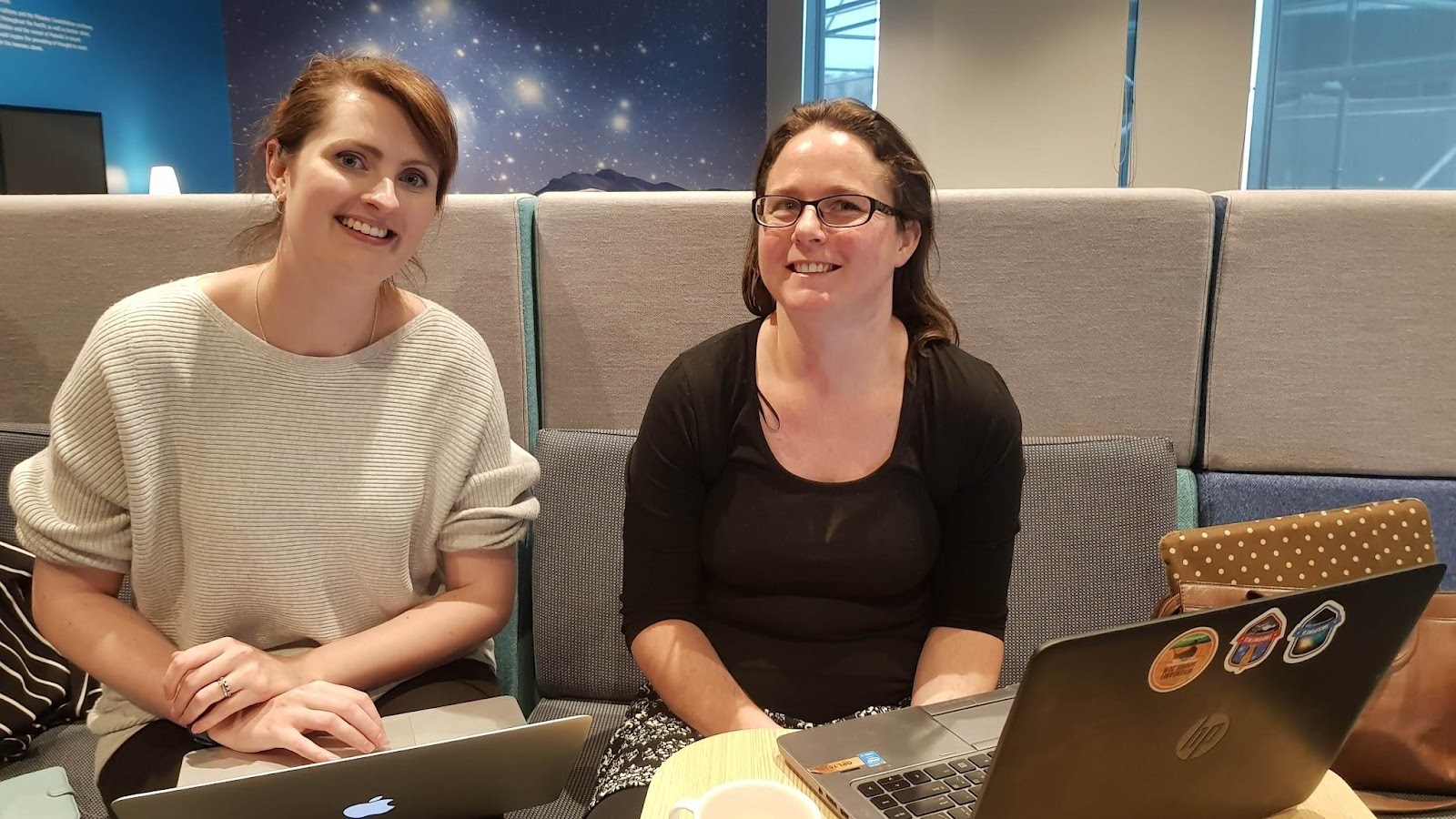


Danni’s inquiry started off focusing on literacy learning in years 7 & 8 and how that school and cluster data was showing that the rate of learning in many senses was stalling or dropping.  Her inquiring focused totally on what she could do to prevent this in her classroom.


Today Danni started out by sharing her site - a resource bank of texts she has created and used in her classroom.  This was broken into different pages relating to Text Analysis exemplars, Writing Techniques and Connecting Reading and Writing.


This provided us with rich examples and questions based around different genre/examples.  This looked like a fantastic tool at a glance. When we delved deeper it appeared to be even more of a rich tool.  


One of the challenges that Danni had been having is finding/accessing examples of text that will support this resource, some suggestions were made as to who could help including
Aaron Wilson


During the morning we had discussed her inquiry informally and part of this discussion highlighted how many of her shifts in student achievement was related to her high expectations of her children both in what they will achieve and also in the contexts in which she teaches these through.   We talked with Danni about adding a page on high expectation.


As discussion wound up we also discussed possibility adding in how you might use these resources Multimodally (showing links to resources and sites that she and others used..  An interesting point was also raised about ESOL strategies being something to consider within her resource.

Reflections on my own inquiry were huge.  I will cross share Danni’s reflection here and then add to it my own thoughts.


Thoughts going away from KPMG today…

Learning together is empowering - and connecting with those outside of our normal realm of teaching extends our thinking.   As Zac put it “team work is dream work”.

Friday, 27 April 2018

Design thinking Cont

Image result for great change starts with 1 idea quotes

Design Thinking 101

Leslie McBeth explains design thinking in 5 steps as well but uses different terminology.


Discovery

Becoming human centred.  Learning as much as possible about the problem as well as the context (or from the perspective of the 'user'.


Interpretation

Collaborating with others (including experts from different disciplines to come up with a "how might we?"  question.  (the word Might is used instead of can, should and could we as it infers that there is more than one answer, and that no answer is right or wrong in this stage.


Ideation

At this stage it is important to keep an open mind as the main focus at this stage is to come up with multiple solutions (where there is no right or wrong answer).  It is also important to keep the user in mind as well as focusing on their needs.  Crazy, out there ideas are also encouraged at this stage, as this might encourage other ideas.


Experimentation

This is were you experiment with some of the many solutions you came up with in Ideation.  Mkae prototypes or models and use them to gather feedback from their users.  Focus is not on creating the perfect finalized version but as a spring board to gather more and then build on ideas 


Evolution

This stage blends with the Experimentation phase as through the experimentation process solutions evolve and become more refined products.


This is a repeatable process as it is Cyclical and continuous.  


Thursday, 26 April 2018

Design Thinking in 5 Steps

Image result for design thinking image
Step 1:  Empathize
Interviews so you can find out what do people really care about.
Redo this with many people so you can really understand the problem.

Image result for design thinking image
Step 2:  Define the Problem
Look at interviews, underline verbs can help.  
Formulate a problem statement.


Image result for design thinking image
Step 3 :  Ideate
Problem on problem statement.  Come up with ideas that solve problem.  Come up with LOTS of ideas, Sketch up best ideas and show to people you are trying to help.

Image result for design thinking image
Step 4:  Prototype
How does your prototype fit into peoples real life, it might be a combinations of what is alreay used and things you have come up with.

Image result for design thinking image
Step 5:  Test
Test with actual users - don't defend your idea/prototype, learn what works and what doesn't.


Image result for design thinking image

Then go back to Steps 3-5 until you 

Now you are ready to change the world!


Short video that explains each step in a little more detail.

Focusing on the WHY! - DESIGN THINKING

Here is a quick video I have found that very quickly explains Design Thinking in Education.  It briefly explains inquiry through 'Design Thinking' and one of the points that Tom Barrett makes is the importance of keeping the inquiry process in the questioning stage.  This links to the WHY of this posts Title, as this process makes you question the problem more, which in turn helps you to develop a better understanding of the problem and the implications that both the problem and solution has.


This year as part of the MIT process we have been working on the 5 Why's.  Here is a link to a reading we have done on the origins of this process.

Below is a brief video that explains the 5 why's if you are short of time.  Although this is a business focused example it does illustrate the process and benefits of using this process.

One thing I can quite honestly tell you is that although it is very challenging answering some of the Why questions that get thrown as you in this process it definitely challenges your thinking and makes you look into the problem deeply and helps you to narrow down what the problem actually is, and who it affects.  

Another thing I can quite honestly tell you is asking these 5 Why's can also be just as challenging.

Sunday, 22 April 2018

Whangarei EDTech 2018 Summit

As a School group we attended this event last week.  I have to say one thing about these events is that you ALWAYS come away feeling inspired.  Inspired not only by what is said but by the sharing of resources and ideas from others as well as through the connections that you make with each other.

So as a result there are some things I have taken away to hold onto (you can't do everything!!!).  So this years take away ideas are... (and why)


Idea to hold onto No1:  GROWTH MINDSET.

While in our class we have already been focusing on changing mindsets from "I can't do something" to ... "I can try".

Change to implement (or add).  :  Instead of  "I can't do ...", to "I can't do ...YET".


Idea to hold onto No2:  BREAKOUT edu

In our class/school/cluster we already know and use Breakout EDU's and we have already been experimenting with ideas on how to make these more digital.

Change to impelement  :  Use Sites/Google Forms to help make Digital elements to BREAKOUT EDU's. - So watch this space.


Idea to hold onto No3:  Sharing

This is probably the biggest and hardest one for me.  Often we do things in our class, school and even cluster that are worthy of sharing. - and within this context I do share.  Often I am presenting at toolkits, PLG's ... but I am always reluctant to share outside of this circle.  SO ...

Change to implement : Make sure I am keeping this blog up to date, Share at Edtech Sydney, Submit at least 1 Breakout I create with the Breakout EDU site before the end of the year, and share 1 thing to Twitter at least every month.


Idea to hold onto No4: - DESIGN THINKING

I kept the best for last!  Michael Davidson ran us through a Design thinking presentation.  This was like CONNECTING THE DOTs for me.  This is the approach we are using with MIT this year, but at a classroom, student level.  It will build on what we have already been implementing but it should take our kids to the next level.


LOVING OUR LEARNING CONTEXT THIS YEAR! 

LEARN FROM YESTERDAY, CHANGE TOMORROW.
Ki akoranga i mua, kia whakahuri apopo